


In the Year of Our Lord (Paul Thomas Anderson), 2025, there was a seismic shift in the culture of movies. What has worked for a couple decades no longer works. Mammoth hero movies are no longer the order of the day. Genre filmmaking is everything. Mid-budget movies are king. What worked yesterday no longer works today. What works today absolutely will not work tomorrow, because what we’ve learned is that this is all unsustainable. By this all, we don’t mean movies, so much as America and The West as a broader capitalist concept, and what follows is that whatever goes in the culture goes in the arts. So, the movies. The end of a bloated phase of blockbusters that have been blocked and busted, the result of this pyrrhic victory, though, is not a shift to success somewhere else, but the complete downfall of the studio system. It’s the end of the world as we know it, and we are all doomed.
From the ashes of the imminent collapse, though, we can already see the light, illuminating from the silver screen. The light ahead of us tells us stories about hope and redemption. It’s a lovely thing, when things fall apart, because someone has to put them back together. We have not reached the point of relief and release, just yet, and may be on the verge of everything getting worse before it gets better, but the movies of the year tell a different story. In times of duress, our art speaks for us, and this year, it speaks boldly and loudly, about the next stage of the arts.
Black Bag


Steven Soderbergh’s new spy picture keeps the spy work in the dialogue. Infused with an invigorating jazzy backdrop, the tension is backed into conversation. There is a flashback of some action, but only of something that already happened, an inevitable fact, while what is most important, this dance of who did what and who can be trusted, stays at the center of things and motivates the movie forward. The rare kind of adult espionage story that ought to be considered and rewarded and is due more attention than it has received.
BLKNWS: Terms & Conditions


The peak of radical filmmaking in 2025, Kahlil Joseph’s BLKNWS: Terms & Conditions is a terrific work of historical reconsideration. What does Blackness mean? How has the course of our history been shaped by Blackness, and our art recontextualized by our understanding of what that means? BLKNWS prompts us to consider the object of history, both in our understanding of a diaspora and its inherent cultural value and in terms of what weight we have given to figureheads and representations of something. By creating a collage of culture, Kahlil Joseph, who created the image and iconography of Kendrick Lamar, has created a broader text that reaches into the past to show us the future of filmmaking. Part art instillation, part genre-bending movie, BLKNWS is one of the year’s bravest and most creative films, that takes the most risks in shaping what movies can be.
Deathstalker


Out of pure love for films and filmmaking, Deathstalker reminds us that practical effects bring us closer to God and that by doing things the real, crafty, and dirty way, what shows on-screen is higher impact, grittier, and holds more weight with the viewer. Meanwhile, Deathstalker is also simply a bang-up action movie. One of the best of those in some time. It also out-succeeds its lame-duck original source movie by leaps and bounds, to the point that it ought to now be considered the definitive article. There is no other original movie. This is the most original movie you can make in 2025.
Eephus

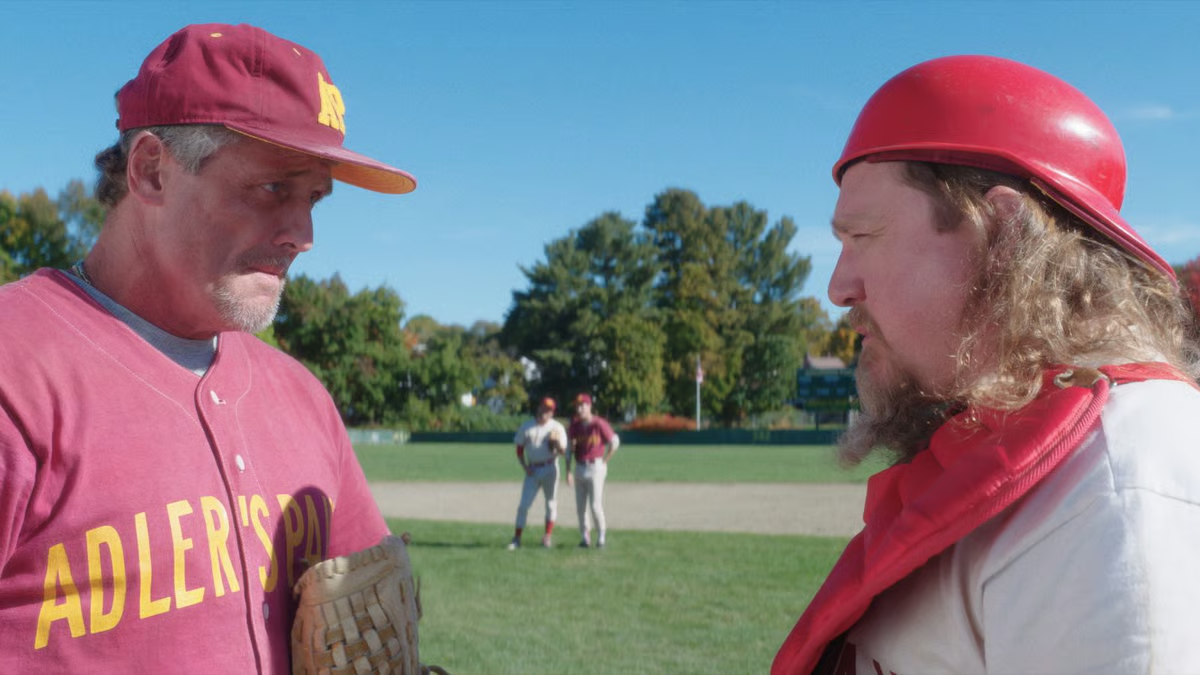
“Today I consider myself the luckiest man on the face of the Earth,” goes the famous Lou Gehrig speech which begins Eephus, a singular baseball hangout movie about the love of the game, time passing us by, and how we have culturally lost our shared communal spaces. If you’re lucky enough to have experienced baseball, not as a delightfully slow-paced televisual game, but as an activity fielded by friends and family, then you understand how anyone who spends the day just playing baseball gets to be the luckiest person on the face of the Earth. The joy of Eephus goes deeper. It’s named after a weird off-kilter pitch which goes slow and then slides fast, which the movie compares to life and the illusion of time: We’re here living in it, it’s all going real slow, and then when we collect ourselves, it’s over. As a eulogy to baseball, Eephus also stands as a Eulogy to America. We had a good run but the lights have gone out. It’s time to go home now.
Train Dreams
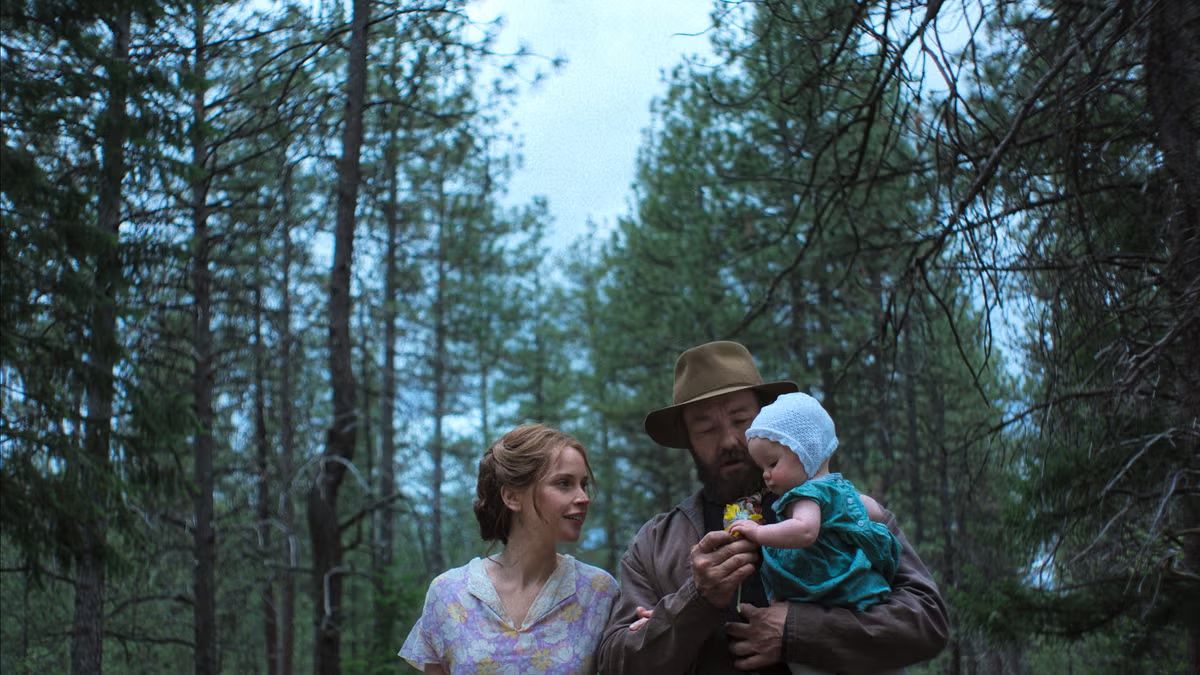
Train Dreams captures the gorgeous vitality of the Pacific Northwest like few other movies have done. It’s a massive credit to the photography of Adolpho Veloso, who shoots color and light, with a depth of understanding of how this natural environment tells its own story about people in spaces and places. Train Dreams, also, is a deeply moving, thoughtful Western, with a lot to say about love and grief. It’s technically assured, boldly directed by Clint Bentley, and features a deeply felt performance by Joel Edgerton. The Western will never die because America always requires a Eulogy.
Marty Supreme

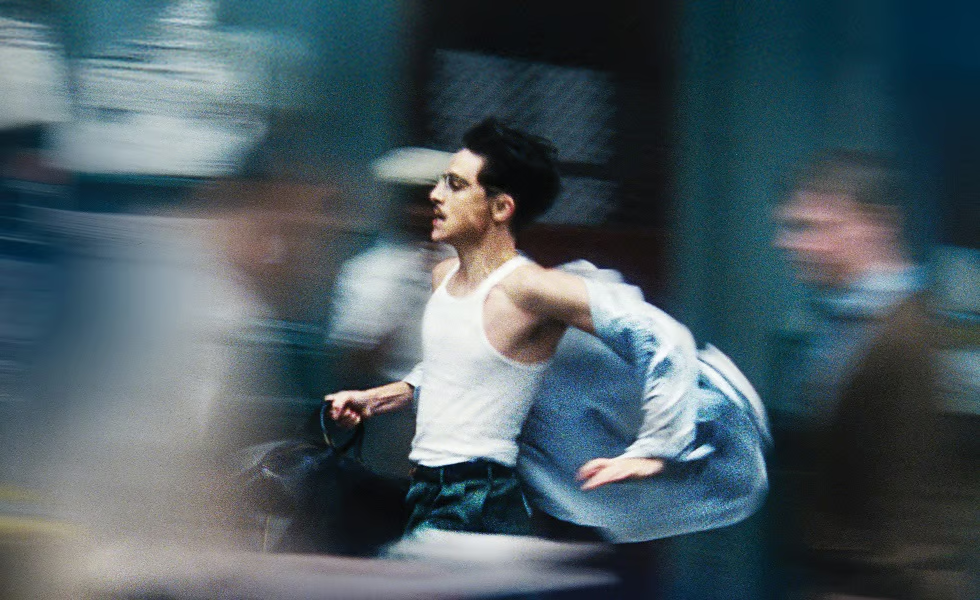
Timothy Chalamet’s headstrong, cocksure, and anxiously invigorating performance is one of the highlights of the year. And that’s just the press tour. Marty Supreme is an American Movie. It ought to stand proudly with the works of the filmmaking legends who have defined our national cinema. Josh Safdie has, meanwhile, emerged as The Safdie Brother. Exceptionally, the Safdie formula has hit its full stride, just as he’s gone solo. And it’s incredible, hard-hitting stuff. The film has texture and is stylistically assured, backed by a propulsive and truly excellent score by Oneohtrix Point Never. Sometimes you can get everything all at once.
No Other Choice

Park Chan-wook speaks directly to the moment of labor rights. No Other Choice is about the consequences of automation, when a man is cut out of his career by a company’s cost-cutting turn to automation, and does something distinctly human in response: Goes after those responsible. It takes pain in getting there. The family unit disintegrating. Park Chan-wook captures it all with heart and the most inspired transitions and editing you’re likely to see in any movie this year. A knockout that earns the many complimentary comparisons to Parasite it will receive.
One Battle After Another

Happy Sweep Season to Paul Thomas Anderson. One Battle After Another is a magnum opus, a signature piece of massive budget resistance art, the kind that never gets made. Not in this era of filmmaking but also not in era’s before it. The film’s positioning, ahead of the sale of Warner Bros., has also signaled that it works as a kind of final statement. A last signature of one of the most storied studios in cinema history, going out with a deeply stylish and assured representation of cinema’s potential. Call it a last stand for auteur work being done in the studio system but it’ll happen again, and the reference points when it happens will be One Battle After Another.
Sinners


Film of the Year. Sinners is everything good about the film industry in 2025. We find Ryan Coogler expanding into his full potential, given a budget to explore big themes in genre, reaching back into the rich catalogued history of original Black storytelling, both in terms of telling horror stories, and anachronistic alt-history stories where it all went down different for Black folks. Featuring an all-timer dual role by Michael B. Jordan, with a phenomenal ensemble cast, Sinners is a pure distillation of culture.
Testament of Ann Lee

Mona Fastvold’s Testament of Ann Lee is an immediate masterpiece of sight and sound. It’s the pitch perfect example of how audiovisual accompaniment can produce the desired effect through their combined strengths. Both sound and image sing, lifting off the screen, as the characters engage in the most rousing spiritual hymns, shaking, music coursing through them, the film like a pressurized bottle going off, exploding with cinema.